
This post may contain links to products that we use and love, and we may earn a commission at no cost to you.
Leaburg Fish Hatchery has been a favorite day trip location for over 20 years, even before we had kids. It’s a wonderful place to have a picnic, take a walk, and feed fish! In recent years, they’ve made several improvements and we were especially surprised to see a few more on our recent trip.
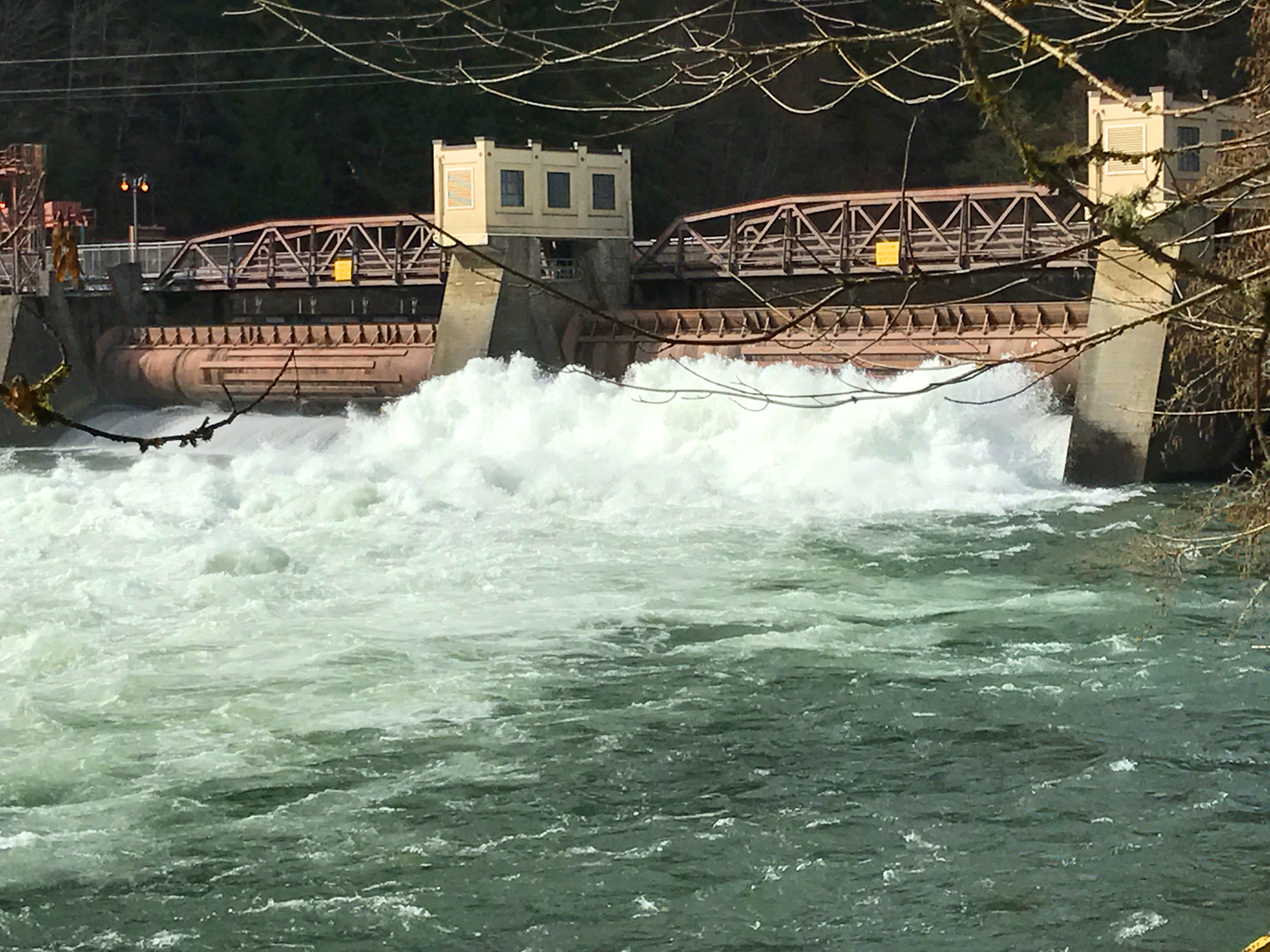
When you arrive at Leaburg Fish Hatchery, via a scenic drive along the Mckenzie River, you’ll cross the dam and have a few choices of where to go next. Turn to the left and you can park near the bathrooms, explore a small info center, and fish from the shoreline. Go straight and you’ll enter a lush park with picnic tables, fire pits, and volleyball nets. Go toward the right and you’ll enter the magical world of the fish hatchery. Park beneath towering fir and cedar trees, and the roar of the water through the dam will be the first thing you hear. The air is fresh and bright, and it’s easy to forget the rest of the world even exists.
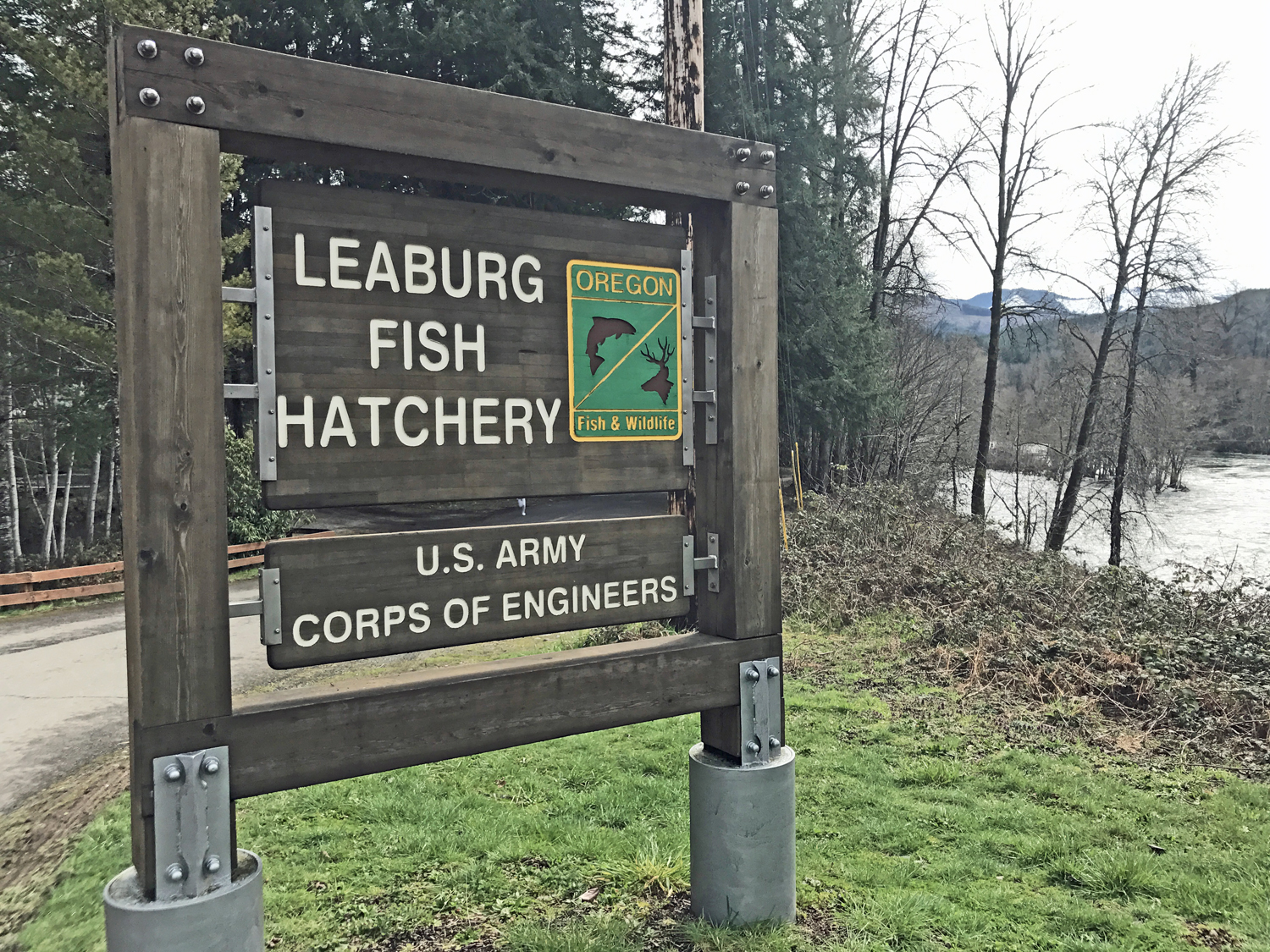
Welcome to Leaburg Fish Hatchery!
Display Ponds
Right next to the parking area are the display ponds. Here, you can feed rainbow trout and, if you’re lucky, see huge sturgeon. There’s a fish feeding machine, so bring plenty of quarters. They’ve made improvements to the path around the ponds, shoring up the perimeter and replacing a couple of the bridges.
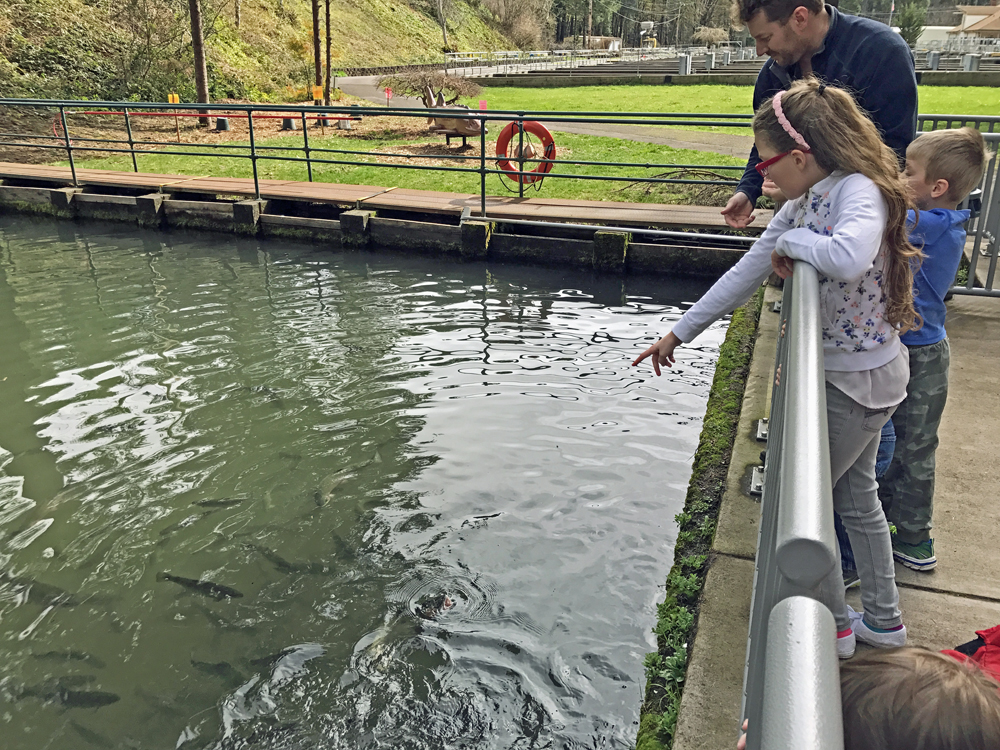
Bring lots of quarters to feed the fish! Leaburg Fish Hatchery’s display ponds are filled with trout and sturgeon.
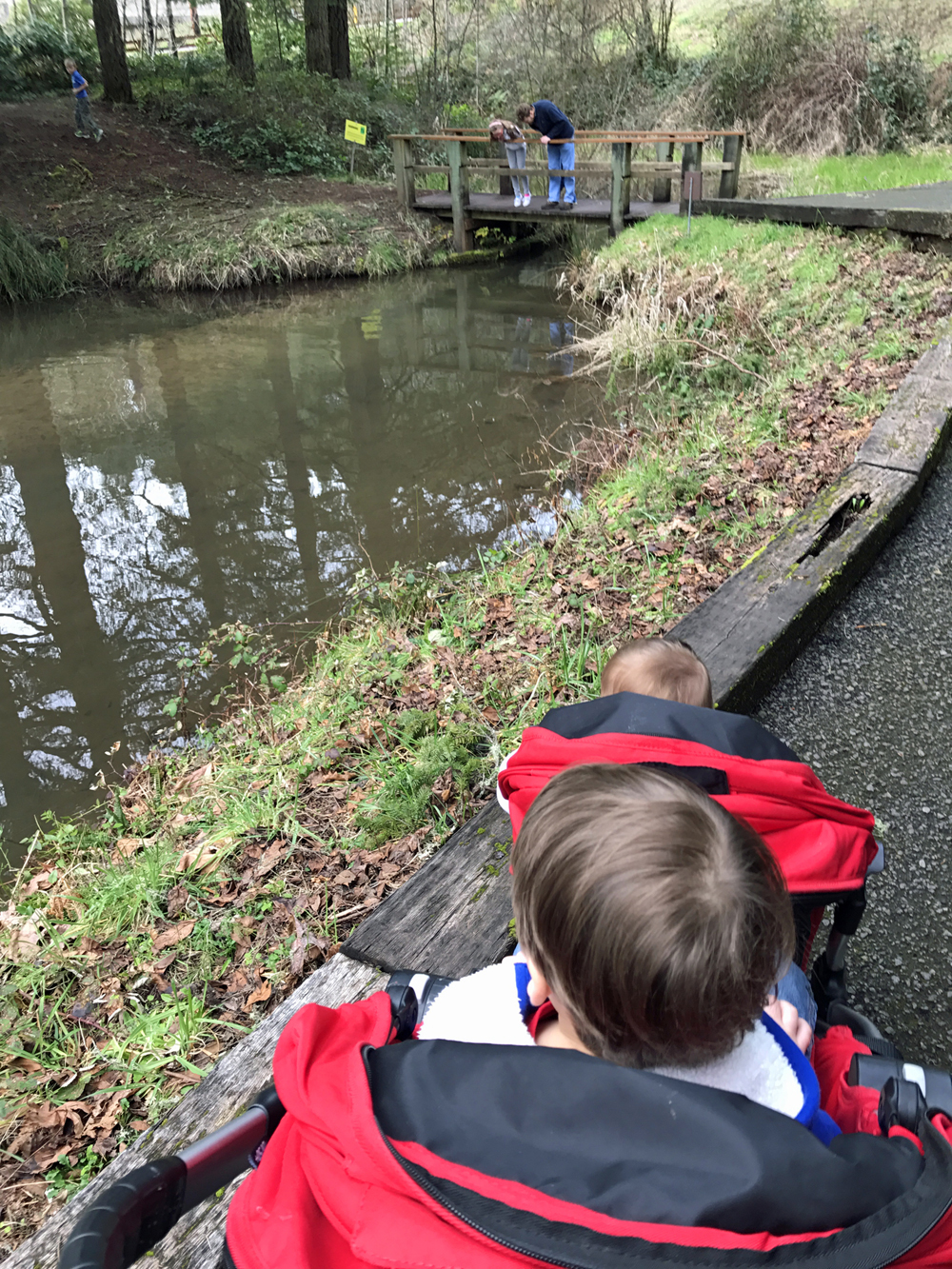
The path around the display pond is completely paved now (since this photo was taken) and it’s great for strollers or wheelchairs.
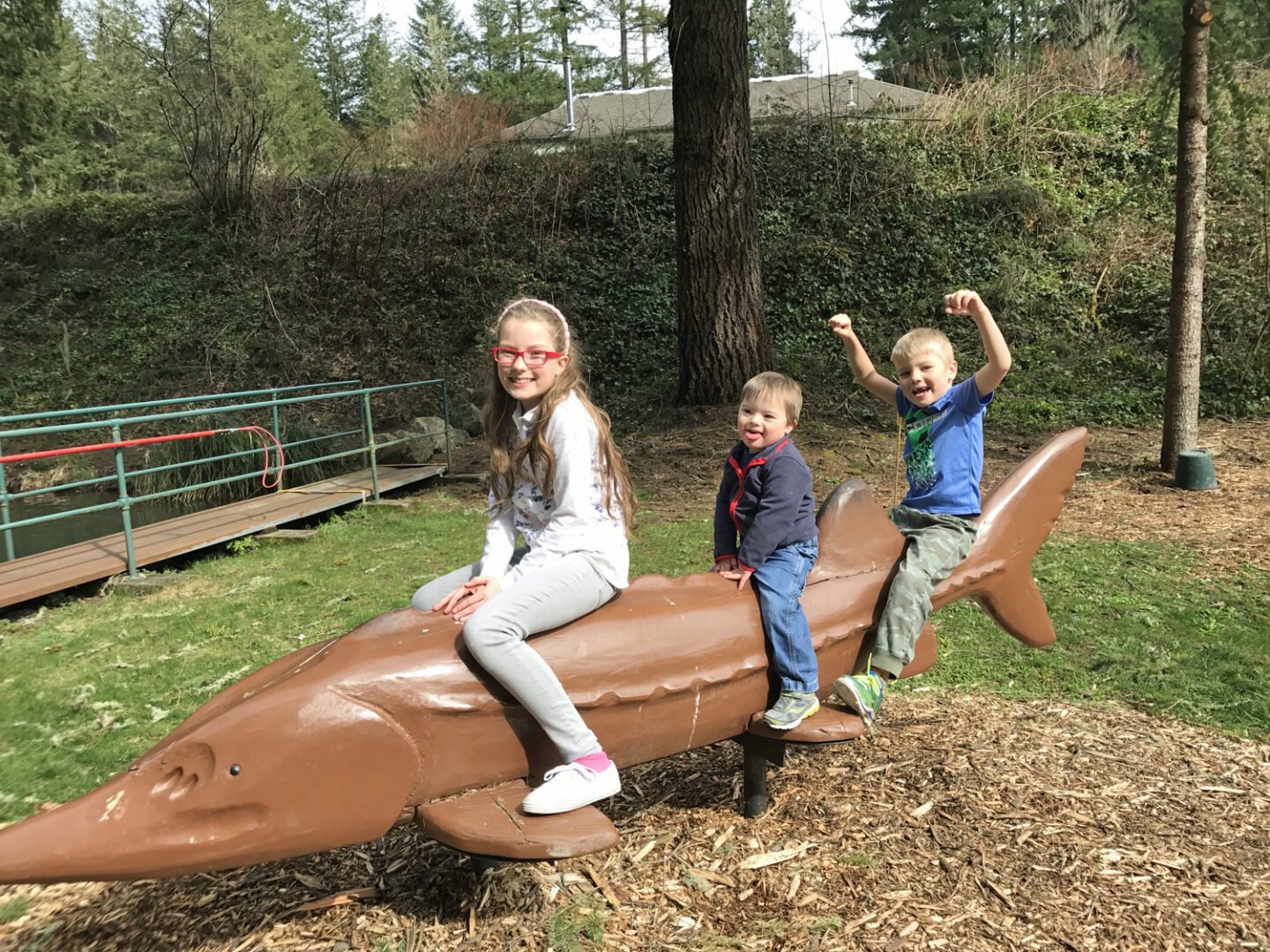
This statue has been a feature of Leaburg Fish Hatchery for as long as I can remember. We have many photos of our children over the years posing with this fish.
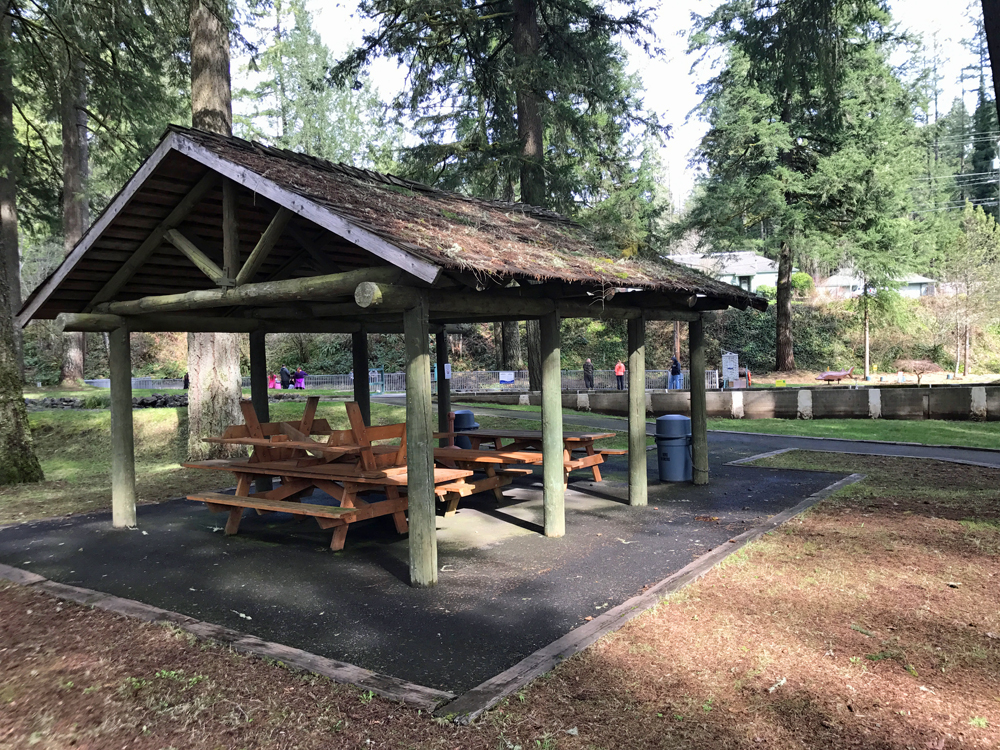
There’s even a picnic shelter! We often take picnics in the summer, but it’s nice in the winter to have a dry spot if needed!
Leaburg Hatchery Ponds
After walking around the display ponds and feeding the fish, we wandered over to the hatchery’s ponds. Many of them were empty this time of year, but there were a few that had baby trout.
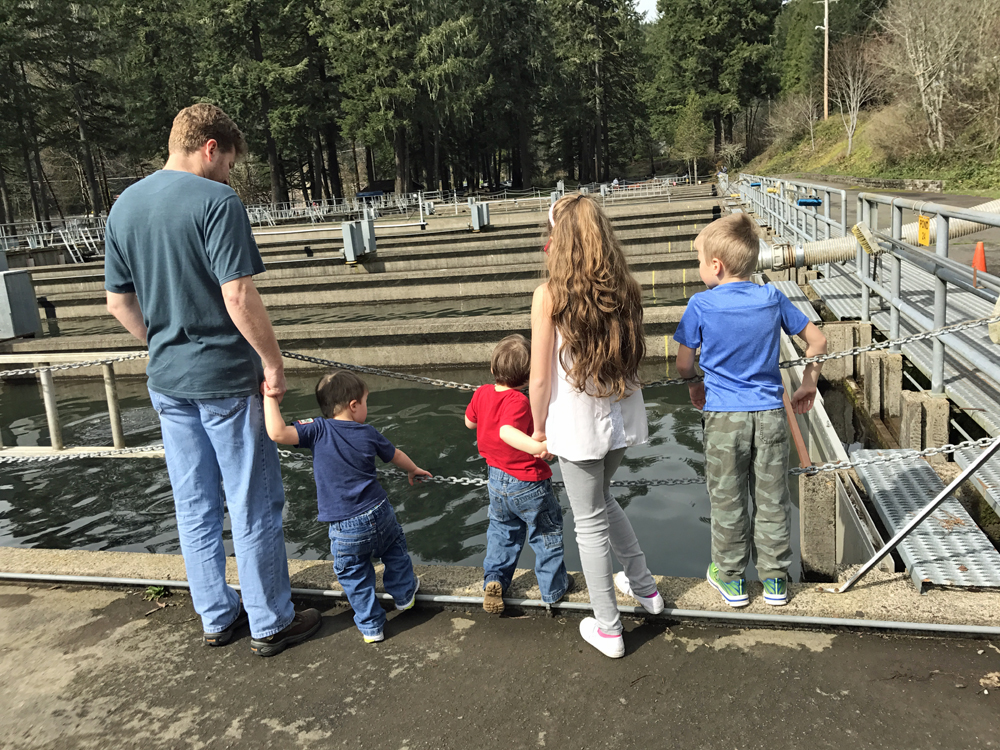
Many rows of long, skinny hatchery ponds fill the grounds at Leaburg Fish Hatchery. Some months of the year, nearly every pond will be filled with fish. On our visit, in late March, only a few of the ponds held fish. Visitors aren’t able to feed these fish, but it’s fun to watch them thrash to the surface in hopes of food.
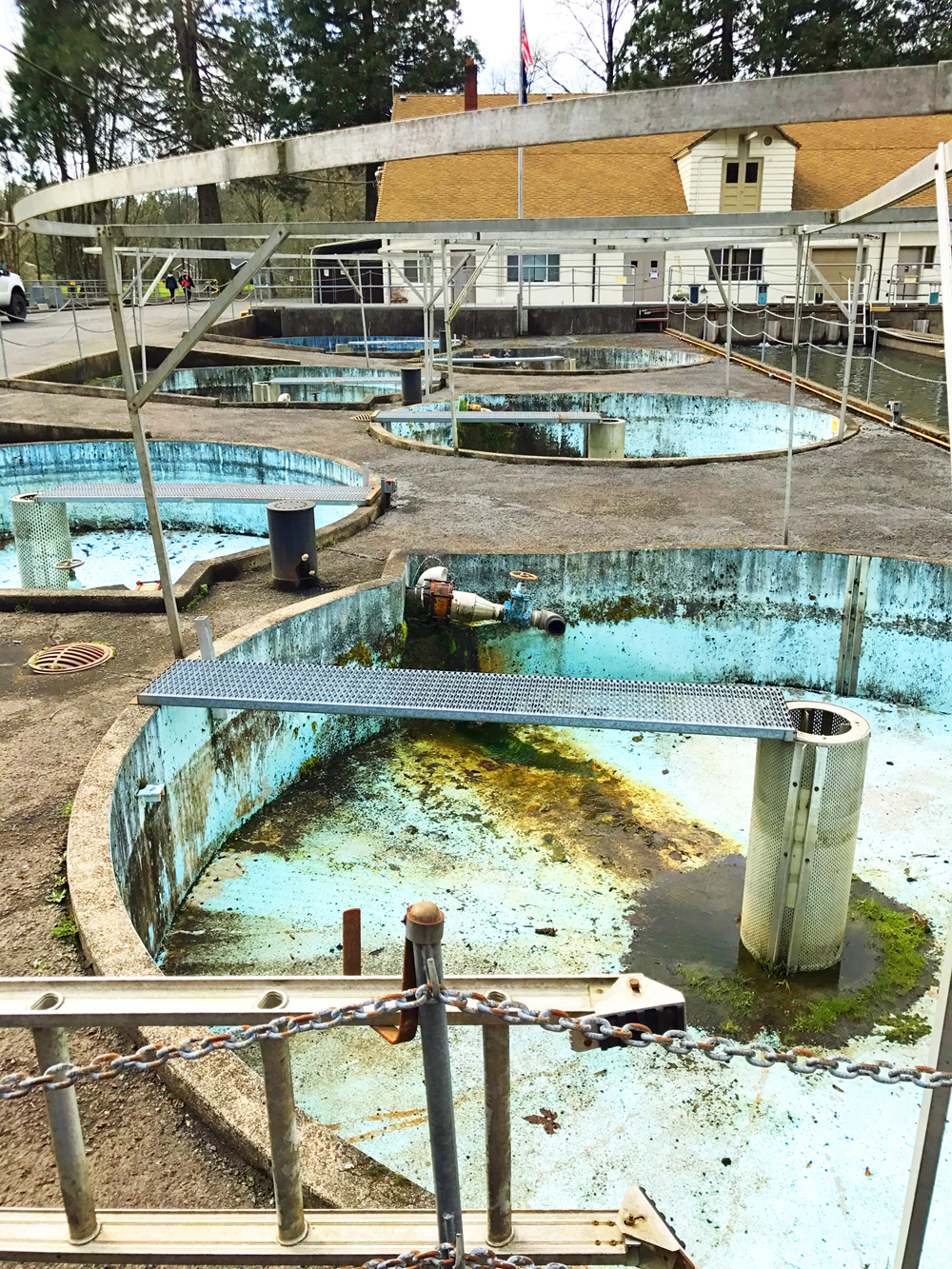
When we first started coming to Leaburg, these ponds were still in use. It’s been years since I’ve seen fish in them, so I’m not sure they’re used at all anymore. But it was interesting to imagine how they would have been used.
A little Google digging tells me these blue tanks were rearing ponds. Oregon Department of Fish and Wildlife has the following photo from 2004:
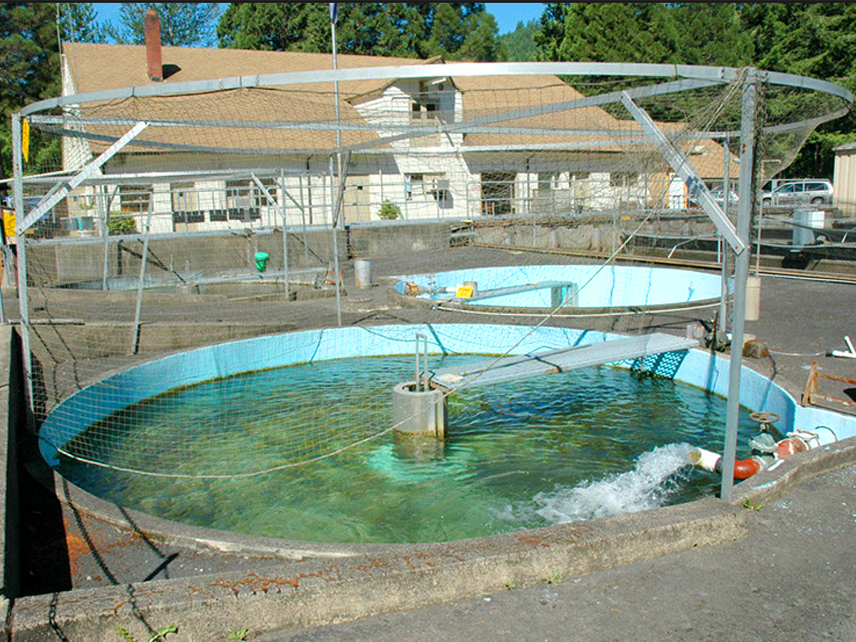
A photo of the rearing ponds in 2004 when they were still in use. Photo courtesy of ODFW.
Leaburg Hatchery Aquatic Education Park
After exploring all of the cement ponds, toward the back of the hatchery is a small treasure that you must not miss. We’ve never seen it before, so it must be pretty new. This sign is the entrance to an accessible deck overlooking a small pond, and a short interpretive trail. The trail isn’t wheelchair- or stroller-friendly, so I took the big kids and we walked the trail while reading the signs.
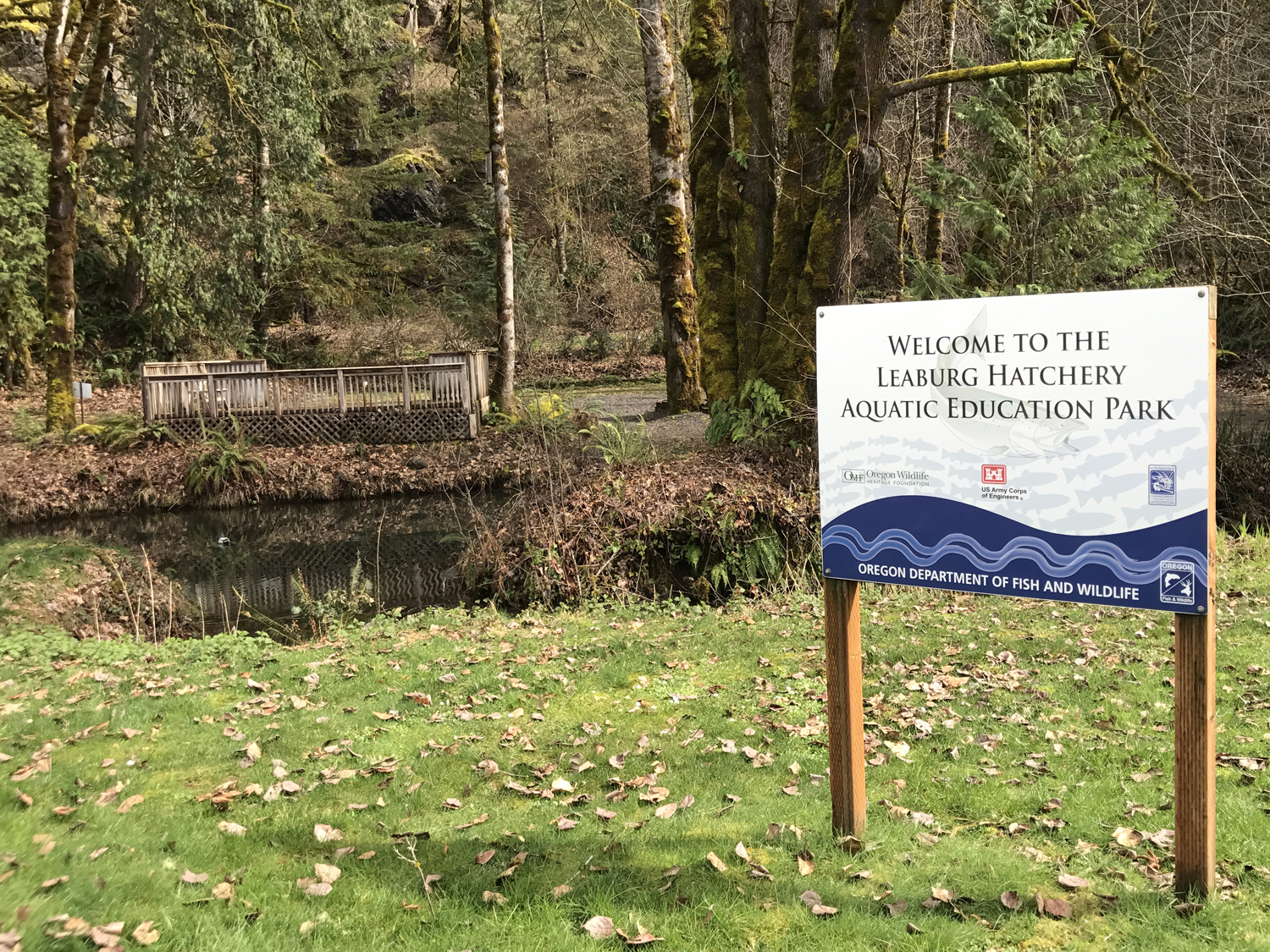
Don’t miss this little trail tucked into the back corner of the hatchery!
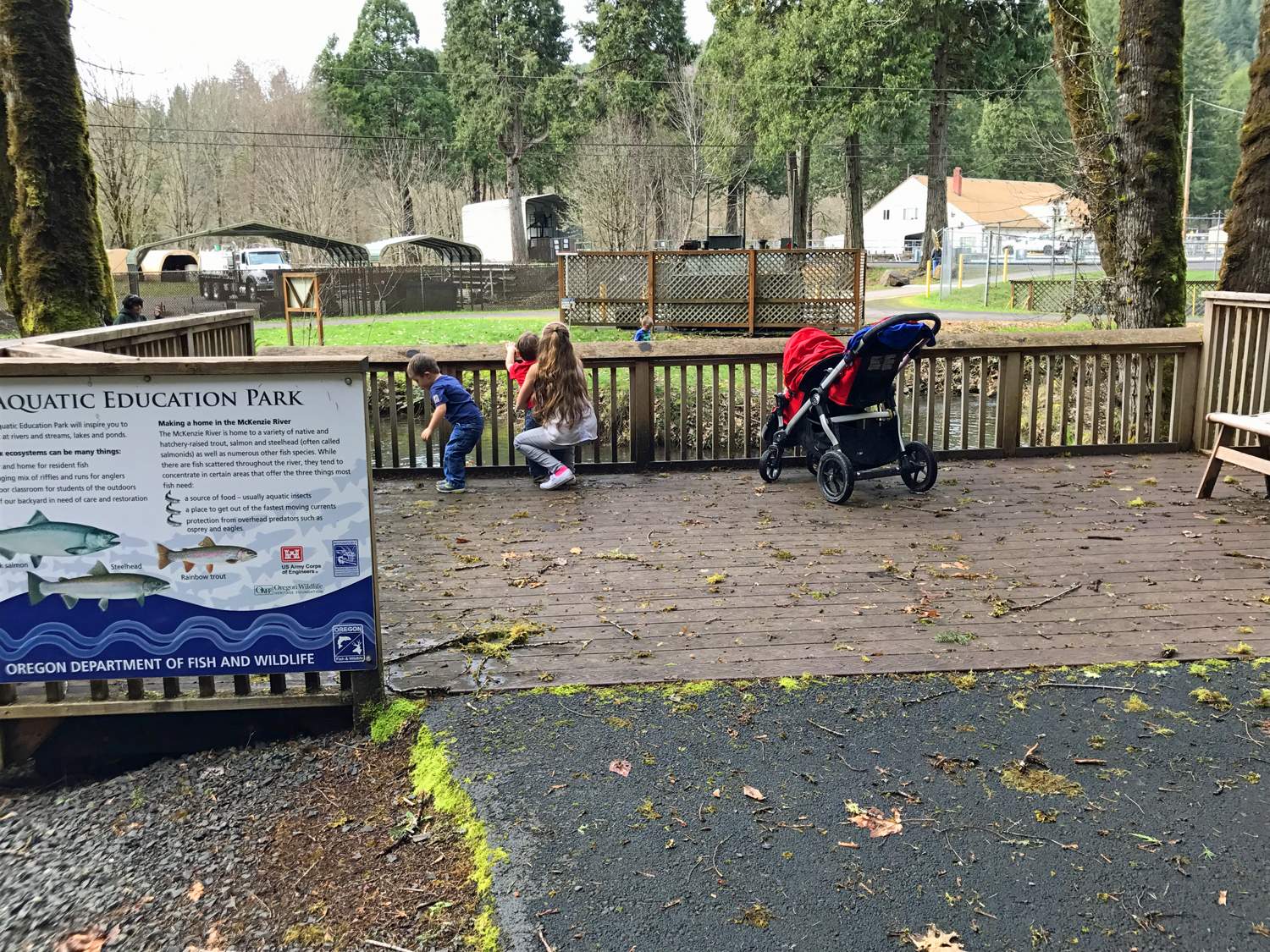
Leaburg Fish Hatchery aquatic education park with interpretive trail and accessible observation deck.
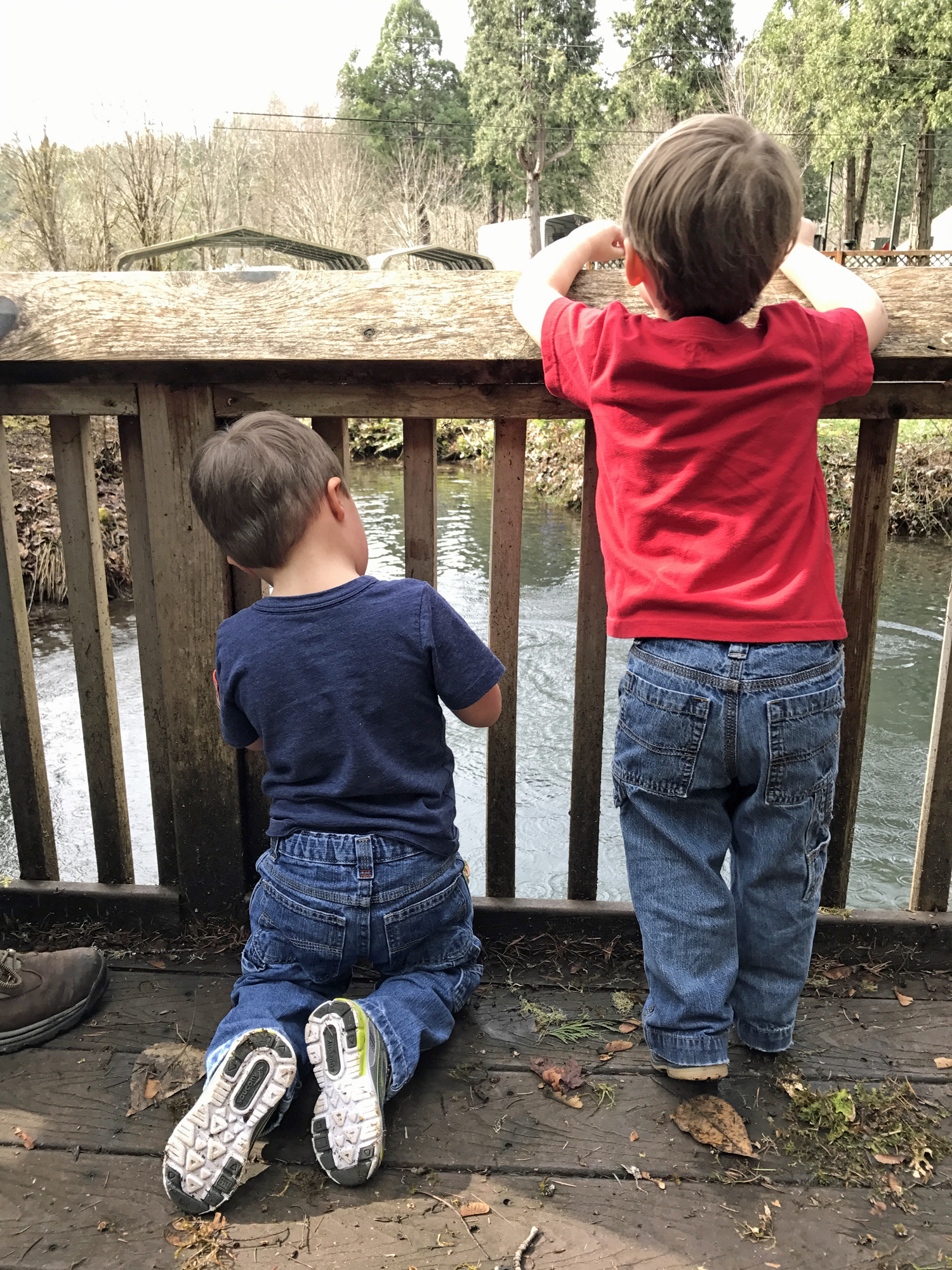
Our kids checking out the observation deck over a small pond.
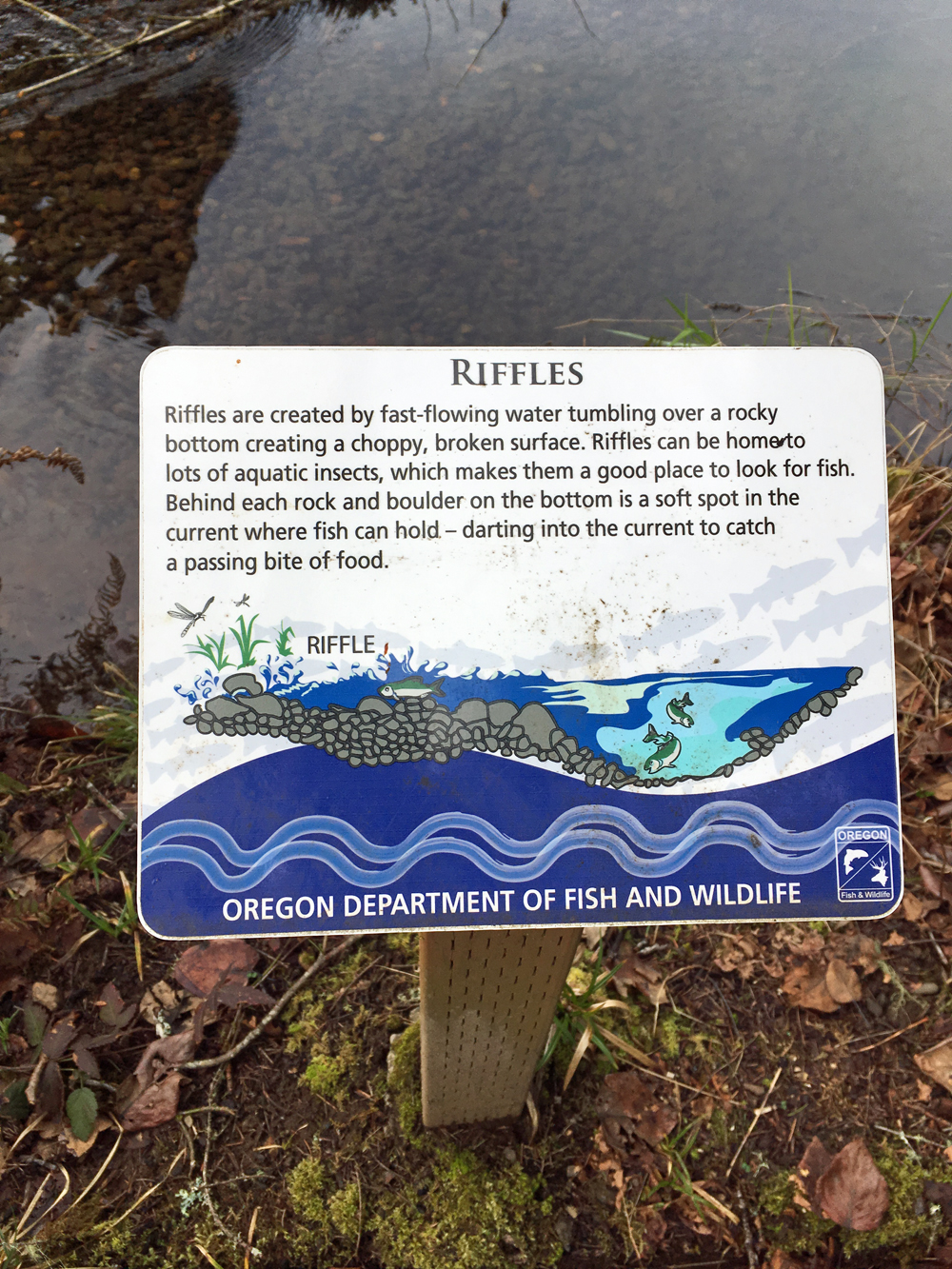
Riverside Observation Deck and Gigantic Trees
For the last part of our visit to the Leaburg Hatchery, we walked along the river. Bordering the hatchery is a row of gigantic cedar trees and the Mckenzie River, a sparkling blue roiling with rapids after the dam. There’s an accessible observation deck, perfect for enjoying the river view.
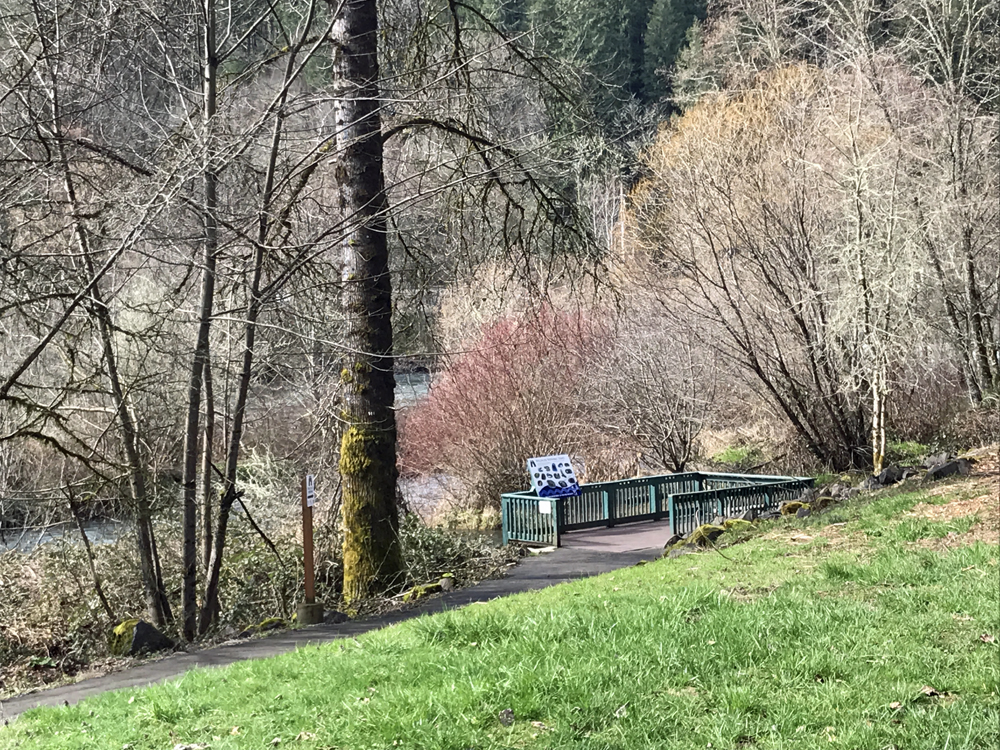
This little deck overlooks the Mckenzie River. It’s accessible and gives a nice view!
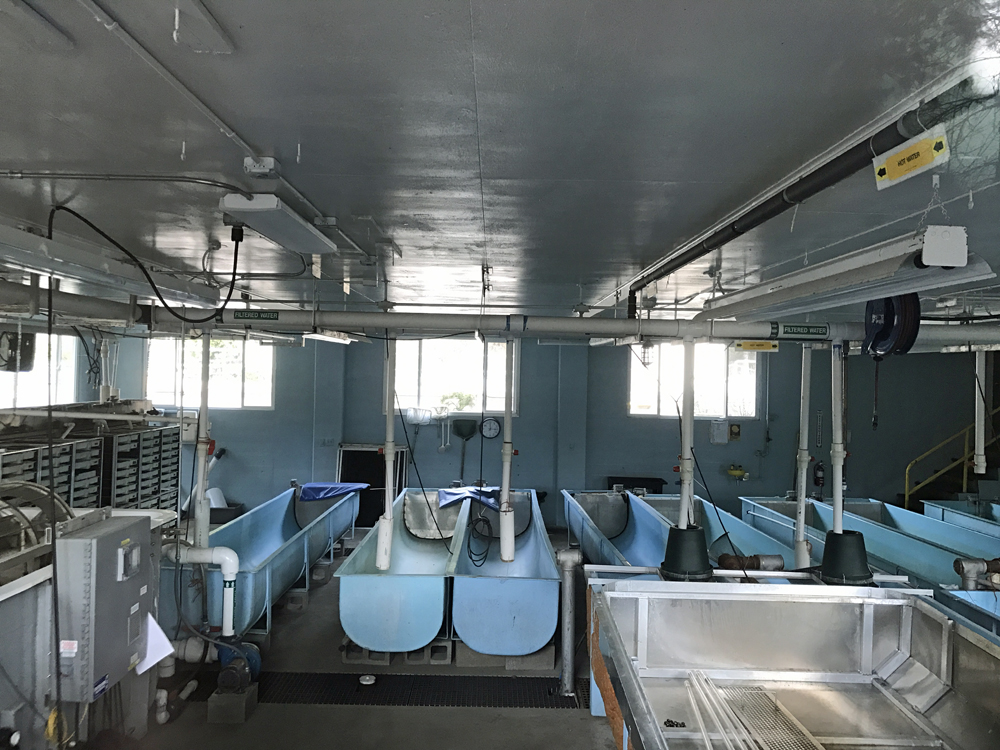
We peeked through the windows of the hatchery and marveled at all of the equipment used to sort the fish.
History of Leaburg Fish Hatchery
Leaburg Fish Hatchery was built in 1953, coinciding with the closure of nearby Old Mckenzie Trout Hatchery (half mile north, on the other side of the lake and highway, now a county park). The dam at the Leaburg Fish Hatchery was built during the late 1920s and went into operation in 1930. It continues to provide hydro-electric power to the city of Eugene through Eugene Water & Electric Board.
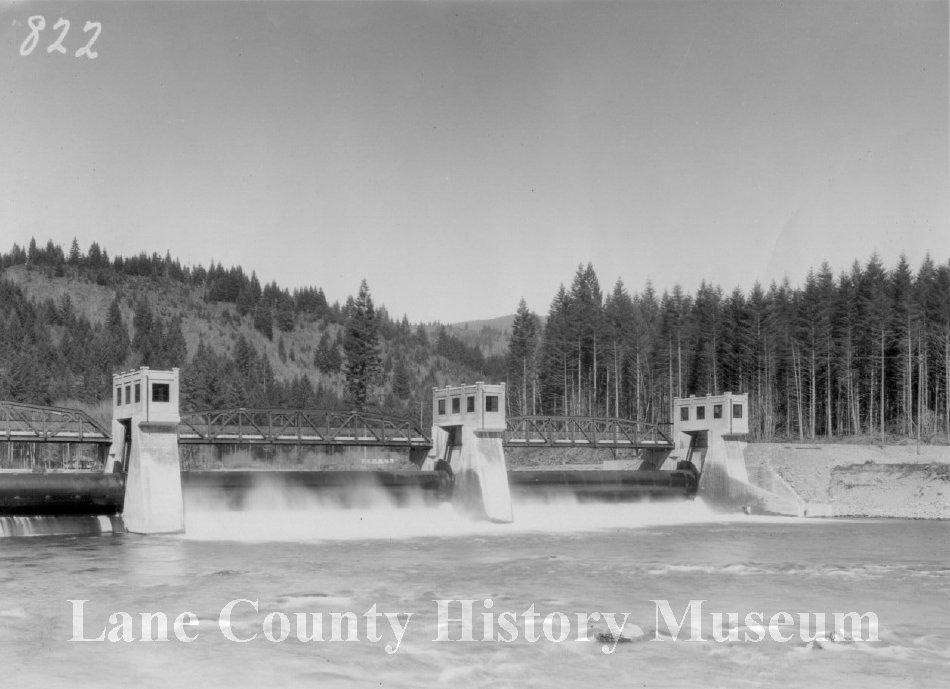
Leaburg Dam, in 1931, shortly after going into service. Photographer unknown, part of the Lane County Historical Museum collection. Used with permission.
If You Go
If you’re near the Eugene/Springfield area, or passing through on the Mckenzie Highway, the Leaburg Fish Hatchery is a perfect place to stretch your legs, let the kids run, and have a picnic. Sometimes the hatchery is our only destination, other times it’s just a stop along the way. We love to visit and I always enjoy seeing the changes they’ve made between our visits. It’s also an ideal place to visit during the winter, because the walkways are paved, so no mud!
The hatchery is about 20 minutes from Springfield (30 from Eugene). Bathrooms are available. Food and drinks are nearby at Ike’s Pizza across the highway. There are multiple picnic areas, including a couple that are covered. Plenty of parking, and visiting is free.
Oh, and remember to take quarters for the fish food!
Cost: free
Parking: lots of parking available along the display ponds and under the trees
Bathrooms: flush toilets available to the left of the bridge, vault toilets available in the hatchery parking lot. There is also now a public restroom in the main hatchery building.

1 comment
What a fun little family adventure! One of our favorite parks here in Michigan had once been a fish hatchery for the state. It has since been converted to a park but we still enjoy the trails through the ponds they once used, and it even has a small train depot (obviously no longer in use) where they would load up the fish to ship them to other parts of the state.