
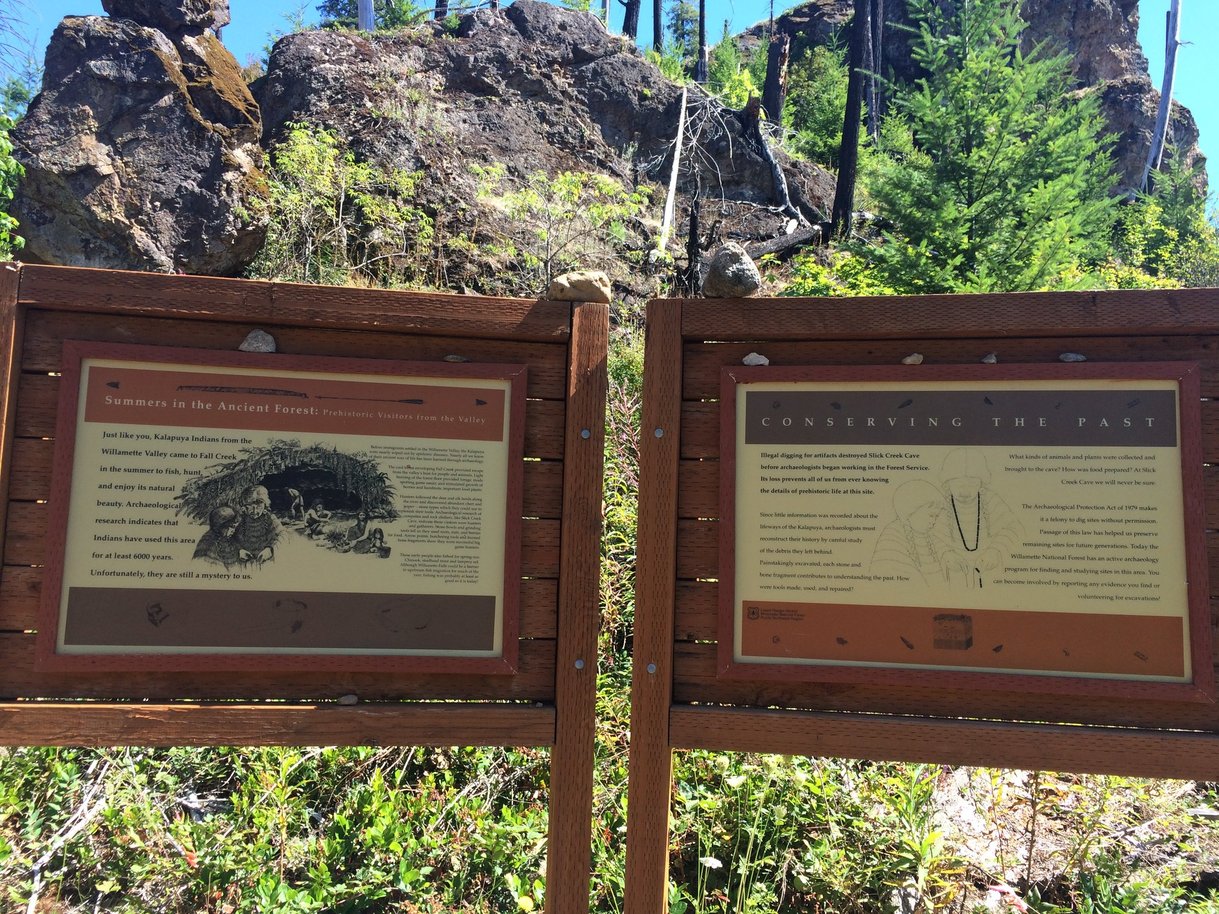
These interpretive signs were posted near the Slick Creek Cave. Sadly, both were destroyed in the 2017 Jones Fire. My photos are from July 2016. I am posting transcripts of what they used to say.
Summers in the Ancient Forest: Prehistoric Visitors from the Valley
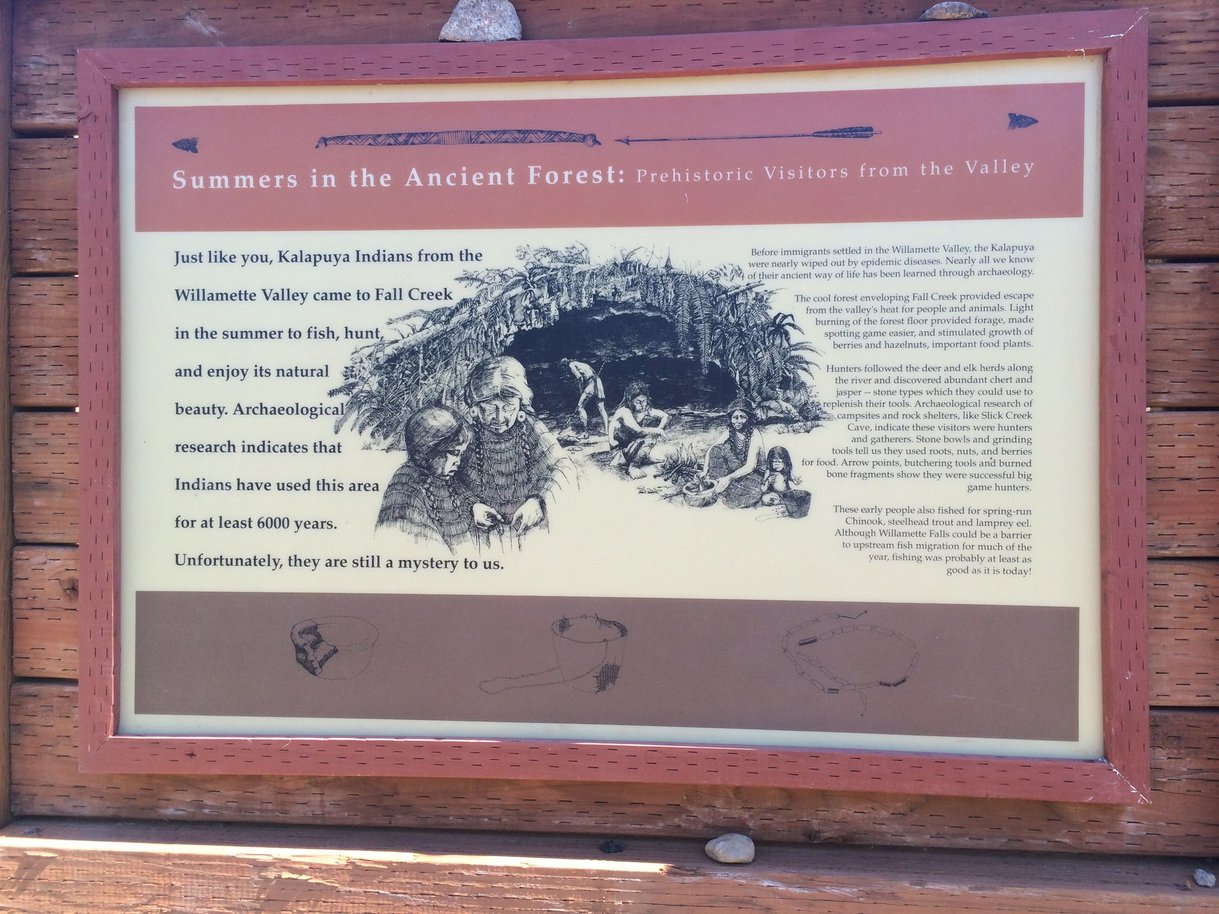
Just like you, Kalapuya Indians from the Willamette Valley came to Fall Creek in the summer to fish, hunt, and enjoy its natural beauty. Archaeological research indicates that Indians have used this area for at least 6000 years. Unfortunately, they are still a mystery to us.
Before immigrants settled in the Willamette Valley, the Kalapuya were nearly wiped out by epidemic diseases. Nearly all we know of their ancient way of life has been learned through archaeology.
The cool forest enveloping Fall Creek provided escape from the valley’s heat for people and animals. Light burning of the forest floor provided forage, made spotting game easier, and stimulated growth of berries and hazelnuts, important food plants.
Hunters followed the deer and elk herds along the river and discovered abundant chert and jasper—stone types which they could use to replenish their tools. Archaeological research of campsites and rock shelters, like Slick Creek Cave, indicated these visitors were hunters and gatherers. Stone bowls and grinding tools tell us they used roots, nuts, and berries for food. Arrow points, butchering tools and burned bone fragments show they were successful big game hunters.
These early people also fished for spring-run Chinook, steelhead trout and lamprey eel. Although Willamette Falls could be a barrier to upstream fish migration for much of the year, fishing was probably at least as good as it is today!
Conserving the Past
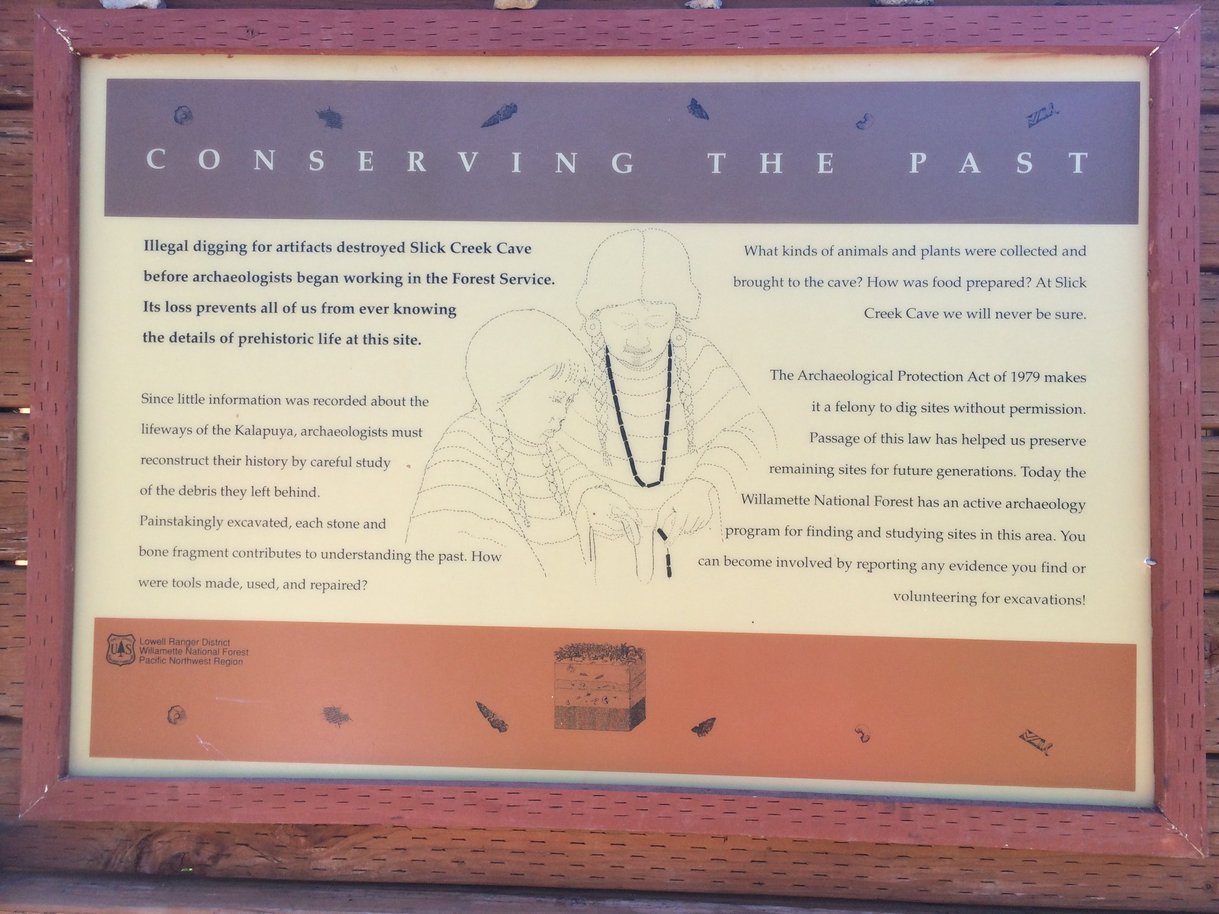
Illegal digging for artifacts destroyed Slick Creek Cave before archaeologists began working in the Forest Service. Its loss prevents all of us from ever knowing the details of prehistoric life at this site.
Since little information was recorded about the lifeways of the Kalapuya, archaeologists must reconstruct their history by careful study of the debris they left behind. Painstakingly excavated, each stone and bone fragment contributes to understanding the past. How were tools made, used, and repaired?
What kinds of animals and plants were collected and brought to the cave? How was food prepared? At Slick Creek Cave we will never be sure.
The Archaeological Protection Act of 1979 makes it a felony to dig sites without permission. Passage of the law has helped us preserve remaining sites for future generations. Today the Willamette National Forest has an active archaeology program for finding and studying sites in this area. You can become involved by reporting any evidence you find or volunteering for excavations!
